Summer 2026 (Volume 36, Number 2)
Update from Saskatchewan
Download PDF
By Regan Arendse, MD, FRCPC, PhD
Clinic nurses play an indispensable role in the successful functioning of a modern rheumatology practice. Their contributions extend far beyond traditional nursing responsibilities, encompassing patient education, counselling, coordination of care, medication management, and emotional support for patients living with chronic rheumatological diseases. In an era where biologic therapies and advanced targeted treatments have transformed the management of inflammatory arthritis and autoimmune diseases, clinic nurses have become central to ensuring that patients receive safe, effective, and timely care.
One of the most important responsibilities of rheumatology clinic nurses is counselling patients regarding biologic therapies. These medications are complex, expensive, and associated with potential risks that can create anxiety for patients. Nurses spend considerable time explaining the purpose of the treatment, expected benefits, possible side effects, infection risks, monitoring requirements, and the importance of adherence to therapy. Through their compassionate and patient-centred approach, they help alleviate fear and empower patients to make informed decisions regarding their treatment.
Clinic nurses also play a pivotal role in facilitating patient enrollment into the various patient support programs provided by pharmaceutical companies. These support programs are helpful in assisting patients to access their biologic medications, coordinate drug delivery, and arrange ongoing monitoring. The administrative burden associated with biologic therapy initiation can be substantial, requiring prior authorizations, insurance forms, laboratory documentation, and coordination between physicians, pharmacies, and support agencies. Rheumatology nurses expertly navigate these complex systems to ensure that patients experience minimal delays in receiving therapy.
In addition, nurses are instrumental in securing financial coverage for these costly medications through provincial reimbursement programs and private health insurance plans. Without their dedication and organizational expertise, many patients would face significant barriers to accessing life-changing therapies. Nurses advocate tirelessly on behalf of patients by preparing submissions, obtaining supporting documentation, and communicating directly with insurers and reimbursement agencies. Their efforts frequently determine whether a patient can begin or continue essential treatment.
As rheumatological diseases evolve over time, many patients require switching between biologic therapies due to side effects, intolerance, or loss of therapeutic effect. Rheumatology nurses facilitate these transitions smoothly and efficiently. They educate patients about the new medication, coordinate discontinuation and initiation schedules, and monitor for complications or adverse events during the transition period. Their continuity of care provides reassurance to patients during what can often be a stressful and uncertain process.
Another invaluable aspect of the rheumatology nurse’s role is addressing patient concerns and questions regarding medication administration. Many biologic therapies are self-administered by subcutaneous injection, which can initially be intimidating for patients. Nurses provide practical education and hands-on training regarding injection techniques, medication storage, infection precautions, and safe administration practices. Their accessibility and willingness to answer questions foster patient confidence and improve adherence to therapy.
Despite their enormous contribution, clinic nurses, together with medical office administrators, often remain under-recognized for the critical role they play within rheumatology practices. Their dedication, compassion, and expertise are essential to the efficient functioning of the clinic and the well-being of patients.
It is therefore especially fitting that Denise Carolus, from the office of Drs. Regan Arendse and Sohail Awan in Saskatoon, was awarded the prestigious Nurse Hero 2025 Sterling Trophy by Sandoz Canada, presented by Kevin McKay, the Territory Manager. This distinguished recognition honours her invaluable service, unwavering commitment, and outstanding contribution to patient care within rheumatology. We pay tribute to Denise Carolus for her exceptional dedication and congratulate her on receiving this auspicious and well-deserved award.
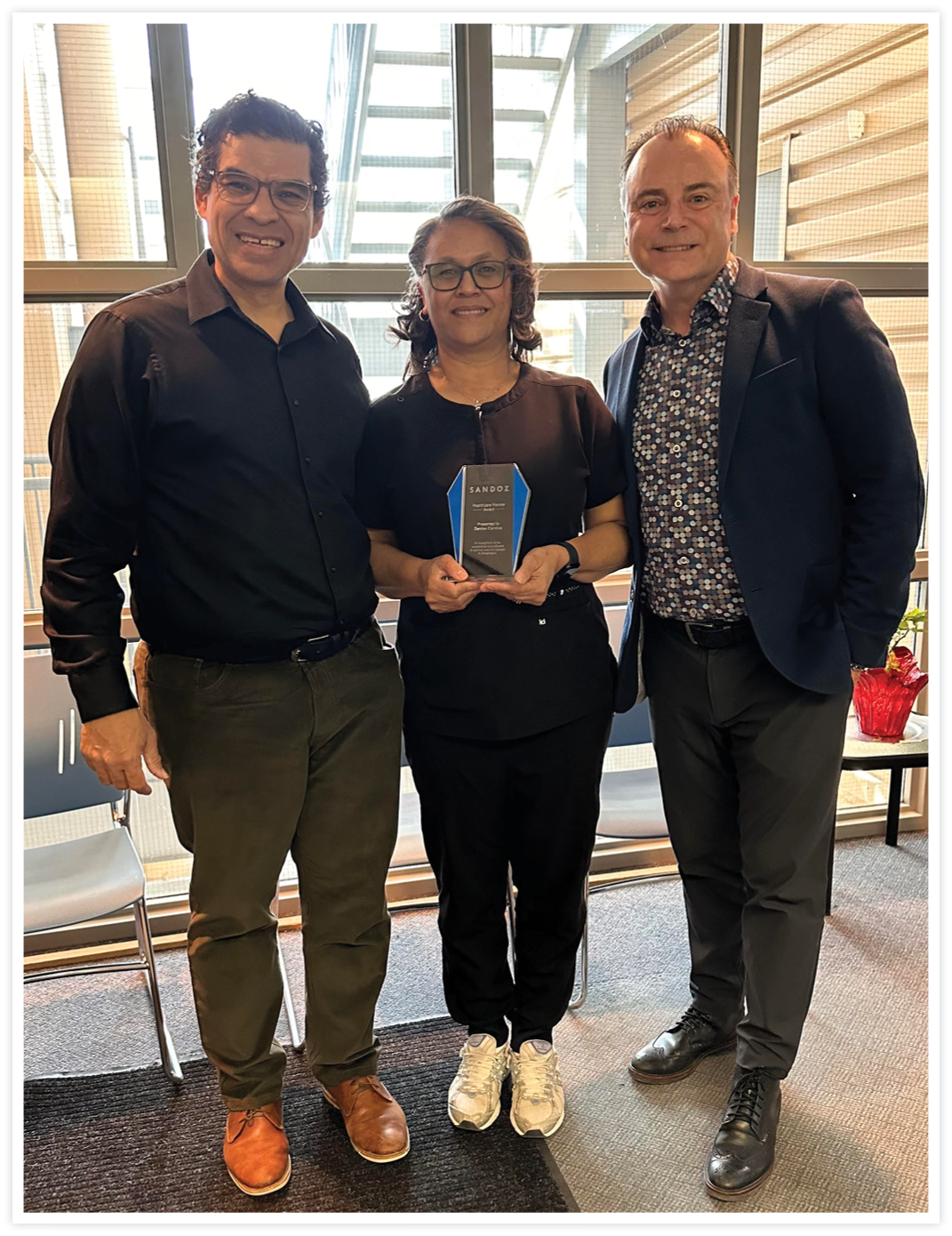
From left to right: Dr. Regan Arendse; Denise Carolus, who was awarded the prestigious
Nurse Hero 2025 Sterling Trophy by Sandoz Canada; and Kevin McKay of Sandoz Canada.
Regan Arendse, MD, FRCPC, PhD
Clinical Assistant Professor
Division of Rheumatology
University of Saskatchewan
By Bindu Nair, MD, MSc, FRCPC
Hello from sunny Saskatchewan! Since the last update, our rheumatology community has grown. In Saskatoon or the “Bridge City”, we are fortunate to have Dr. Shreyasi Sharma, Dr. Anton Moshynskyy, Dr. Michael Schinold,
Dr. Tara Swami, and Dr. Sohail Awan join us. We are also delighted to welcome Dr. Chance McDougall, who is now practicing in Regina, the “Queen City.”
There continues to be high clinical demand for rheumatology services, and our rheumatologists lead in providing high quality care. Dr. Keltie Anderson and Dr. Vanessa Rininsland both head combined Rheumatology-Respiratory Medicine clinics with pulmonary medicine colleagues. Dr. Vanessa Rininsland and Dr. Sarah Oberholtzer have developed a Northern Rheumatology Clinic to improve access and provide care for northern Saskatchewan communities.
Dr. Ardyth Milne is the Clinical Co-Lead for the Immunoglobin (IG) Stewardship Program of Saskatchewan.
Dr. Sarah Oberholtzer chairs and organizes the Annual Rheumatology Meeting of Saskatchewan (ARMS). This yearly event delivers excellent evidence-based presentations from regional, national, and international speakers, providing a forum for lively discussion.
Bindu Nair, MD, MSc, FRCPC
Professor of Medicine
Division of Rheumatology
University of Saskatchewan
|
-EN-v2.gif)


-EN-v1.gif)