Spring 2026 (Volume 36, Number 1)
Patient Perspective:
Lucy Kovalova-Woods
Download PDF
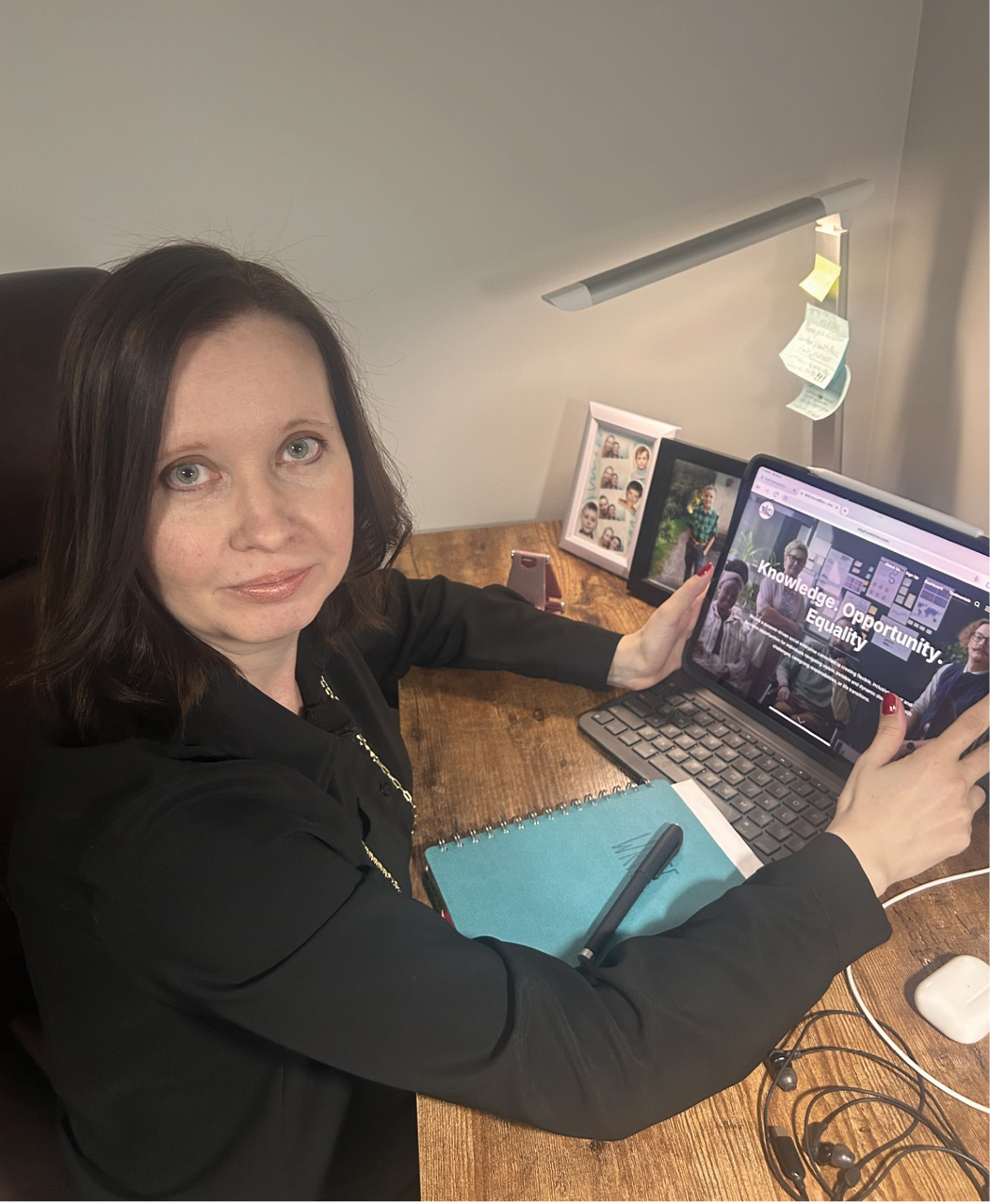
My journey with rheumatoid arthritis and fibromyalgia did not begin with clarity. It began with confusion—subtle pain, intermittent swelling, and a deep fatigue that slowly dismantled the life I once recognized. At first, I convinced myself that I was simply stressed, tired, or “overworked.” I tried to push through, hoping it would pass. But when everyday tasks began requiring extraordinary effort, I knew something was very wrong. It was a quiet kind of loss, one that others could not see. At times, it felt difficult even to share it with my husband.
The hardest part was invisibility—I was not ill in the eyes of others. Invisible and dynamic disabilities come with an added layer of frustration. I often heard, “But you look fine.” Those words can feel heavier than symptoms themselves. They make you second-guess your own reality before you learn to advocate for yourself. When pain flares but leaves no visible trace, you learn to live between the seen and the unseen—a space where your body knows the truth, even when the world does not.
Adjusting to chronic illness meant more than managing physical changes—it meant rethinking identity. Before illness, I spent my career helping businesses and entrepreneurs build strategies and operations. Suddenly, I could not complete a single task, my cognitive function was so badly compromised. I had to learn a new pace, a new way of finding myself and accept that rest is not failure, but a tool. It took me more than two years, and only now am I rebuilding myself and my business, but this time with deeper purpose and a stronger voice.
Living in this fragile state between ability and limitation helped me see what so many patients truly need: flexibility—not only in healthcare, but also in work, and community. That realization led me to develop WKG Foundation, a disability inclusion initiative focused on helping people with visible, invisible, and dynamic disabilities access meaningful employment and self-realization.
Today, I am honoured to serve on the Board of the Canadian Arthritis Patient Alliance (CAPA). This has been a pivotal chapter in my life. Advocacy gave me not only connection, but direction. Working with patient partners, researchers, and healthcare professionals helped me find a voice that illness once silenced. CAPA reminded me that being a patient does not end our contribution—it reshapes it. Advocacy turned isolation into community, and fear into meaningful action.
Living with multiple chronic conditions has reshaped my life, but it had also expanded it. I learned that identity could evolve, strength can be quiet, and purpose can grow from challenge.
Through lived experience, I have learned the value of compassion, collaboration, and inclusive systems.
Illness changed the way I move—but it strengthened the way I stand:
For inclusion and for the belief that everyone deserves a chance to thrive.
Read my new book on disability and career transition: https://www.amazon.ca/dp/B0G3M9FNQT
Lucy Kovalova-Woods
Calgary, Alberta
Patient Partner, serving on the Board of Directors at CAPA
and WKGfoundation.com
|
-EN-v2.gif)

-EN-v1.gif)