Spring 2026 (Volume 36, Number 1)
Key Takeaways from the
13th International Conference on Reproduction, Pregnancy and Rheumatic Diseases
By Shahin Jamal, MD, MSc, FRCPC; and Stephanie Keeling, MD, MSc, FRCPC, on behalf of
Maeve Gamble, MD, FRCPC; Dharini Mahendira, MD, MScCH, FRCPC; Viktoria Pavlova, MD, FRCPC; Thanu Ruban, MD, FRCPC; and Jenny Shu, MD, FRCPC
Download PDF
The 13th International Conference on Reproduction, Pregnancy and Rheumatic Diseases was held in May 2025, in beautiful Vienna and attended by rheumatologists from across Canada. This collaborative meeting included physicians and allied health professionals from around the world with a variety of perspectives including fertility medicine, rheumatology, neonatology, obstetrics and gynecology, and internal medicine.
Some of the key takeaways which are relevant to Canadian rheumatologists are outlined below.
Fertility
Despite a decline in ovarian reserve with age, there are an increasing number of births in women over age 35. This is partly due to changes in social norms and advances in technology including use of frozen eggs and egg donation. In women with rheumatic diseases, chronic inflammation, gonadotoxic medications, and auto-antibodies targeting ovarian function can all impact fertility. In men with rheumatic diseases, chronic inflammation and gonadotoxic medications can impact sperm count and motility. Well-controlled rheumatic diseases are usually not the cause of infertility, and a thorough work-up should be done to exclude other causes. These can include hormonal factors and anatomical factors. Interdisciplinary evaluation and counselling is key. Remember that chronic exposure to nonsteroidal anti-inflammatory drugs (NSAIDs) can lead to subfertility and delay time to pregnancy.
Cryopreservation
Cryopreservation is most successful in younger people. In females, it should ideally be initiated at least 7 days prior to and not more than 2-3 weeks after exposure to cytotoxic medication. Gonadotropin-releasing hormone (GnRH) analogues may not be sufficient to protect fertility during cyclophosphamide induction. In men, sperm should be collected and stored prior to cytotoxic drug exposure. Ensure careful counselling on the risks and legal considerations prior to embarking on cryopreservation therapy.
Pregnancy Counselling in Rheumatic Disease
A helpful framework for approach to pregnancy:
• DISCUSS – planning/management of pregnancy and breastfeeding
• DAMAGE – consider pre-existing comorbidities
• DISEASE activity – maintain control
• DRUG safety – continue compatible medications
In 2024, the EULAR task force of 27 experts presented updated Points to Consider for use of anti-rheumatic drugs in reproduction, pregnancy and lactation.1, 2 These points included over-arching principles, an update on compatible drugs for males, females (before and during pregnancy) and lactation, and recommendations on infant vaccines. The over-arching principles include (A) early and regular counselling, (B) treatment before, during and after pregnancy should aim at low disease activity or remission, (C) drug therapy should balance fetal risk against the risk of untreated maternal disease, (D) women should NOT be discouraged from breastfeeding while taking compatible medications and (E) the choice of treatment before, during and after pregnancy should be shared with the patient. Drugs compatible with pregnancy in women include hydroxychloroquine, sulfasalazine, azathioprine, cyclosporine, tacrolimus, colchicine, and biologic disease-modifying antirheumatic drugs (bDMARDs), including non-tumour necrosis factor inhibitors (TNFi). NSAIDs and glucocorticoids should be used selectively. In lactation, compatible drugs include azathioprine, celecoxib, chloroquine, colchicine, cyclosporine, hydroxychloroquine, intravenous immune globulin (IVIG), methylprednisolone pulses, non-selective NSAIDs, prednisone, prednisolone, tacrolimus, and bDMARDs. In males, compatible options include azathioprine, colchicine, cyclosporine, hydroxychloroquine, IVIG, leflunomide, methotrexate (< 25mg/wk), mycophenolate, NSAIDs, prednisone, sildenafil, sulfasalazine, tacrolimus, and bDMARDs.
With new and emerging therapies, the UK Teratology Information Service (UKTIS) (uktis.org) has up-to-date, evidence-based information on medication, vaccine, chemical and radiological exposures in pregnancy. This can be used by health care providers and patients.
Pregnancy Outcomes and Rheumatic Diseases
Pregnancy outcomes in patients with rheumatic diseases have improved over the past ten years, partly associated with higher use of pregnancy and safe conventional and biological therapies. Despite advances, patients with rheumatic diseases continue to have overall higher rates of Caesarian section. Furthermore, patients with lupus and systemic sclerosis have more pre-eclampsia and miscarriages, and patients with Sjogrens have higher early fetal loss. Poor adherence to treatment in pregnancy is associated with adverse pregnancy outcomes. Patient counselling, education and shared decision making is vital to optimize outcomes.
Obstetrical Anti-phospholipid Antibody (APLA) Syndrome:
The most common treatments in obstetrical APLA syndrome include enteric-coated acetylsalicylic acid (ASA) and low molecular weight heparin. Despite these therapies, high-risk pregnancies carry adverse event rates of 20-40%. Other treatments which have been used include hydroxychloroquine, pravastatin, intravenous immune globulin (IVIG) and systemic glucocorticoids. There is emerging data on the use of biologics in pregnancy with positive animal studies and small case series successfully using rituximab, belimumab and TNFi inhibitors.
The Improve Pregnancy in Antiphospholipid Syndrome (APS) with Certolizumab Therapy (IMPACT) study was published in 2025 and included 45 very high-risk patients (clinical APS, + lupus anticoagulant) who were treated with certolizumab pegol from gestational weeks 8 through 28.² Based on historical controls, the adverse pregnancy outcome rate was predicted to be 40%. In this open label study, however, neonatal survival rate was 93%, suggesting that certolizumab may be effective in preventing placental-mediated adverse outcomes in high-risk patients with APLA syndrome.
Menopause and Rheumatic Diseases
Immune changes associated with menopause include increased inflammatory cytokines, decreased circulating B cells and antibody release, shift of immunity to the Th1 axis, and increased cytotoxic activity of NK cells. Based on changes in immunity, there is increased risk of rheumatoid arthritis after menopause, with higher female involvement and more severe disease. On the contrary, systemic lupus erythematosus (SLE) after menopause is lower risk and less severe. Symptoms of menopause can mimic those we see in patients with connective tissue diseases and include hot flashes, joint aches and pains, cognitive changes and depression. Hormone replacement therapy can be used safely in the majority of our patients, but should be used carefully in those with antiphospholipid antibodies and previous thrombosis. In addition, menopause may increase the risk of osteoporosis, depression and cardiovascular disease in patients with rheumatic diseases.
Inclusion of Pregnant Women in Research
Traditionally, pregnant and lactating women have been excluded from clinical trials, particularly in trials evaluating new medications. Very few drugs actually have a label for safe use in pregnancy, even though they are commonly used for pregnancy associated symptoms. Over the past few years, there has been increased advocacy on including pregnant and lactating women in clinical trials with the sentiment that the harm of not including them outweighs the fear of including them. During the COVID pandemic, pregnant patients were included in some of the vaccine trials. With the formalization and growth of obstetrical medicine, it is hoped that pregnant and lactating women will start being included in clinical research. For further information on advocacy and research, this is an excellent resource: https://bridge4womenshealth.org/resources/.
The Canadian Pregnancy and Rheumatic Disease Consortium is a national database for the prospective observational study of pregnant patients with rheumatic disease, with sites expanding to many centers across Canada.
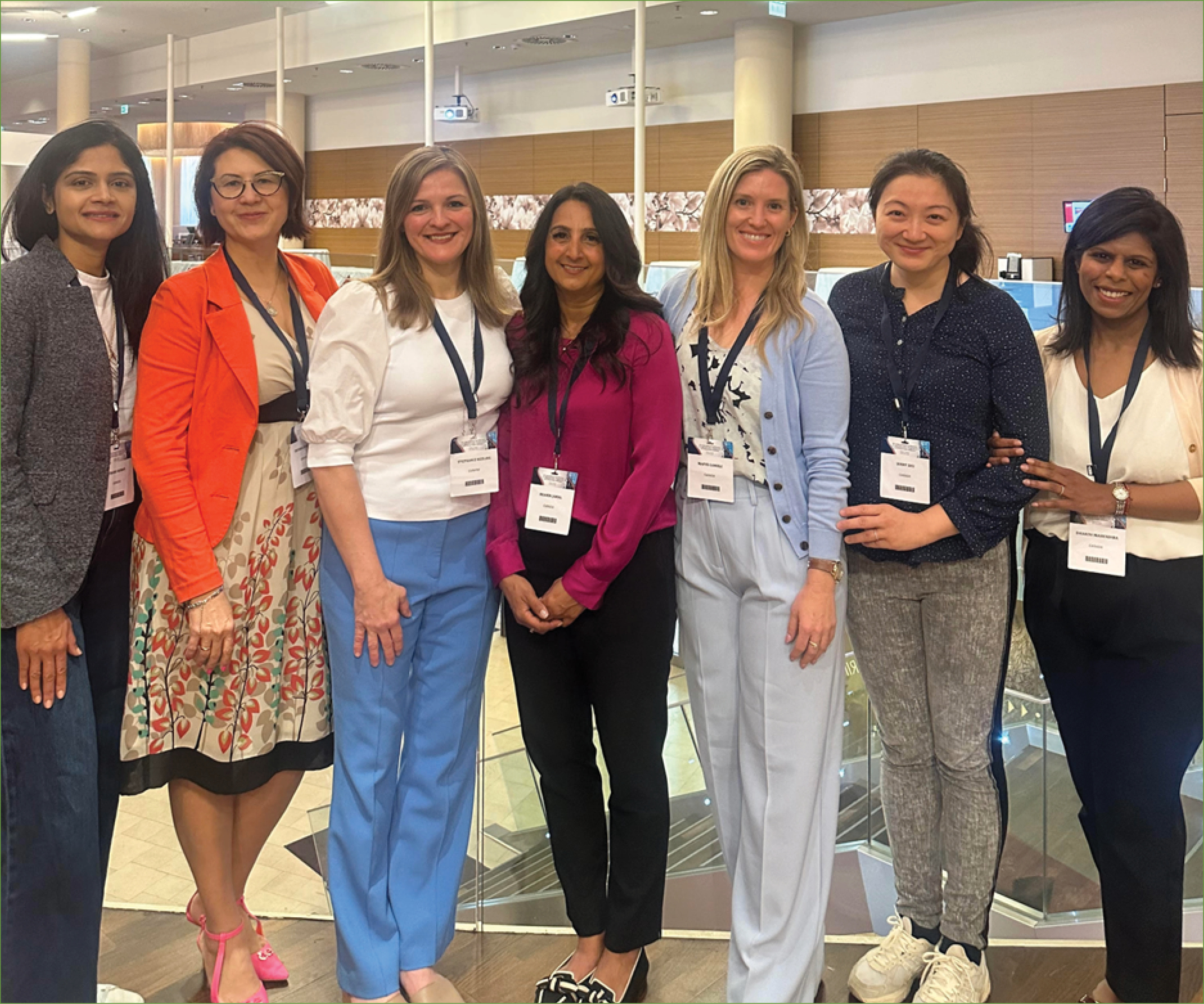
From left to right: Drs. Thanu Ruban, Viktoria Pavlova, Stephanie Keeling, Shahin Jamal, Maeve Gamble, Jenny Shu, and Dharini Mahendira at the 13th International Conference on Reproduction, Pregnancy and Rheumatic Diseases, held in May 2025, in Vienna, Austria.
Shahin Jamal, MD, MSc, FRCPC;
Stephanie Keeling, MD, MSc, FRCPC;
Maeve Gamble, MD, FRCPC;
Dharini Mahendira, MD, MScCH, FRCPC;
Viktoria Pavlova, MD, FRCPC;
Thanu Ruban, MD, FRCPC; and
Jenny Shu, MD, FRCPC
References:
1. Förger F, Pluma Sanjurjo A, Rüegg L, et al. AB1439 Update of the EULAR points to consider for use of antirheumatic drugs in reproduction, pregnancy and lactation. Ann Rheum Dis. 2024;83:2075-2076.
2. Rüegg L, Pluma A, Hamroun S, et al. EULAR recommendations for use of antirheumatic drugs in reproduction, pregnancy, and lactation: 2024 update. Ann Rheum Dis. 2025 Jun;84(6):910-926. Available at https://ard.eular.org/article/S0003-4967(25)00818-0/fulltext.
3. Branch DW, Kim MY, Guerra MM, et al. Certolizumab pegol to prevent adverse pregnancy outcomes in patients with antiphospholipid antibody syndrome and lupus anticoagulant (IMPACT): results of a prospective, single-arm, open-label, phase 2 trial. Annals of the Rheumatic Diseases 2025: 84 (6); 1011-1022.
|
-EN-v2.gif)

-EN-v1.gif)