Fall 2026 (Volume 36, Number 3)
The CRA's 2026 Distinguished Teacher-Educator: Dr. Susan Humphrey-Murto
Download PDF
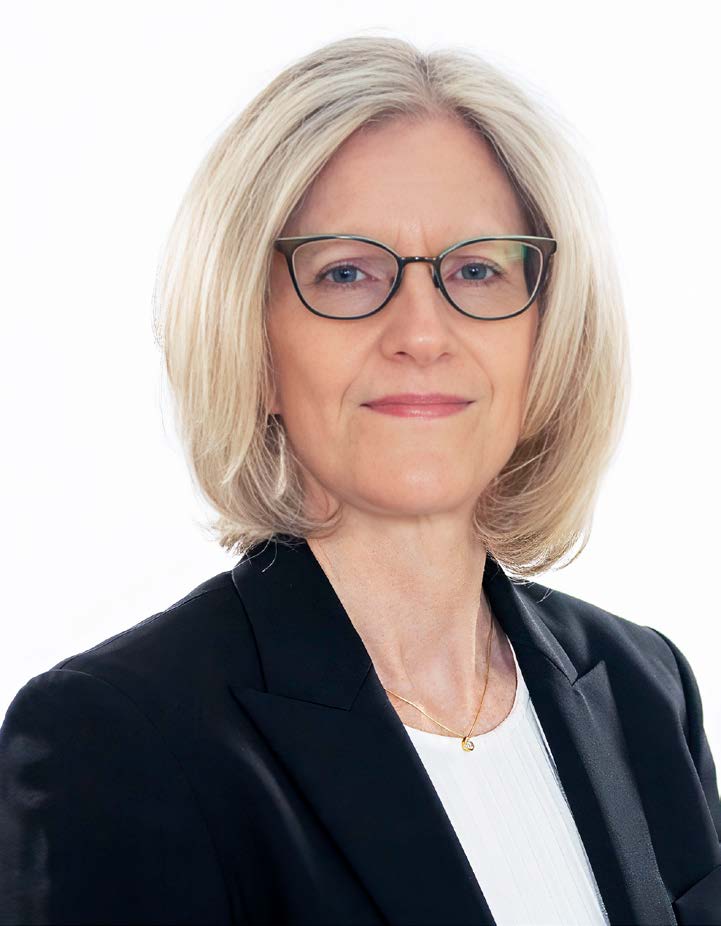
You are a Professor of Medicine at the University of Ottawa with an active clinical practice in general rheumatology and osteoporosis. You began your career with a deep commitment to workplace-based teaching, serving for many years on the CRA Education Committee. You then became interested in education research and currently have 98 publications in leading journals such as Academic Medicine and Medical Education. Your contributions have been recognized with major honours, including the Royal College Duncan Graham Award for Outstanding Contribution to Medical Education, multiple University of Ottawa mentorship and education awards, and a Tier 2 Research Chair.
What are some of the highlights and challenges you have experienced throughout your career?
I recognize this may not be a common perspective, but my career has felt less defined by obstacles than by opportunities. Looking back, I smile because my only conscious career goal was to become a physician. After that, my path was shaped largely by remarkable mentors who saw possibilities that I didn't yet see myself. Dr. Douglas Smith encouraged me to pursue rheumatology. I would say that worked out rather well.
I also had little interest in completing a Master’s in Education at the time—it was simply a requirement for my faculty appointment. Looking back, that degree changed the trajectory of my career. It opened doors to educational leadership, medical education research, and lifelong collaborations.
Medical education research was barely a "thing" when I started. My master’s thesis focused on something that sounds rather dry—how we determine pass-fail scores for objective structured clinical examinations (OSCE) (and why "60%" isn't necessarily the right answer!). That unexpectedly sparked a lifelong curiosity about assessment and learning.
The early years, however, were challenging. There was very little infrastructure or mentorship for education research, particularly while raising a young family. Progress was slow. Things changed when Dr. Claire Touchie and I essentially co-mentored one another. We often joke that we stumbled our way forward together. Another pivotal influence was meeting Dr. Tim Wood, an exceptional psychometrician and methodologist. He patiently taught me how to think and write with greater clarity—a gift that has influenced every paper I've written since.
Perhaps the greatest challenge throughout my career has simply been finding time. Balancing clinical practice, teaching, administration, research, and family is a constant juggling act. I learned to be disciplined, persistent, and realistic about timing. I deliberately delayed building a major research program until my children were older. None of this would have been possible without my husband, an academic anesthesiologist and researcher, along with our caregiver and my late mother, whose love and support made family life possible.
I am also grateful that attitudes toward medical education research have changed enormously over the past two decades. While there is still work to do, the University of Ottawa and the Department of Medicine have increasingly recognized education research as a rigorous scholarly discipline. Holding my second five-year Research Chair reflects how far the field has come.
Over the course of your career, you have held several leadership roles, including Deputy Registrar of the Medical Council of Canada, Co-Chair of the Royal College Education Research Committee, Program Director for both Rheumatology and the Medical Education Fellowship, Associate Director of Education Scholarship at the Centre for Innovation in Medical Education, Chair of the Rheumatology Competence Committee, and now Division Head. Was this something you aspired to?
Leadership was certainly never part of my career plan. In fact, I usually wanted to run in the opposite direction! I remember as a junior faculty member telling my mentor, Dr. Meredith Marks, "Why would I take a leadership course? I have no interest in leading anything." She must have smiled knowing something I didn't.
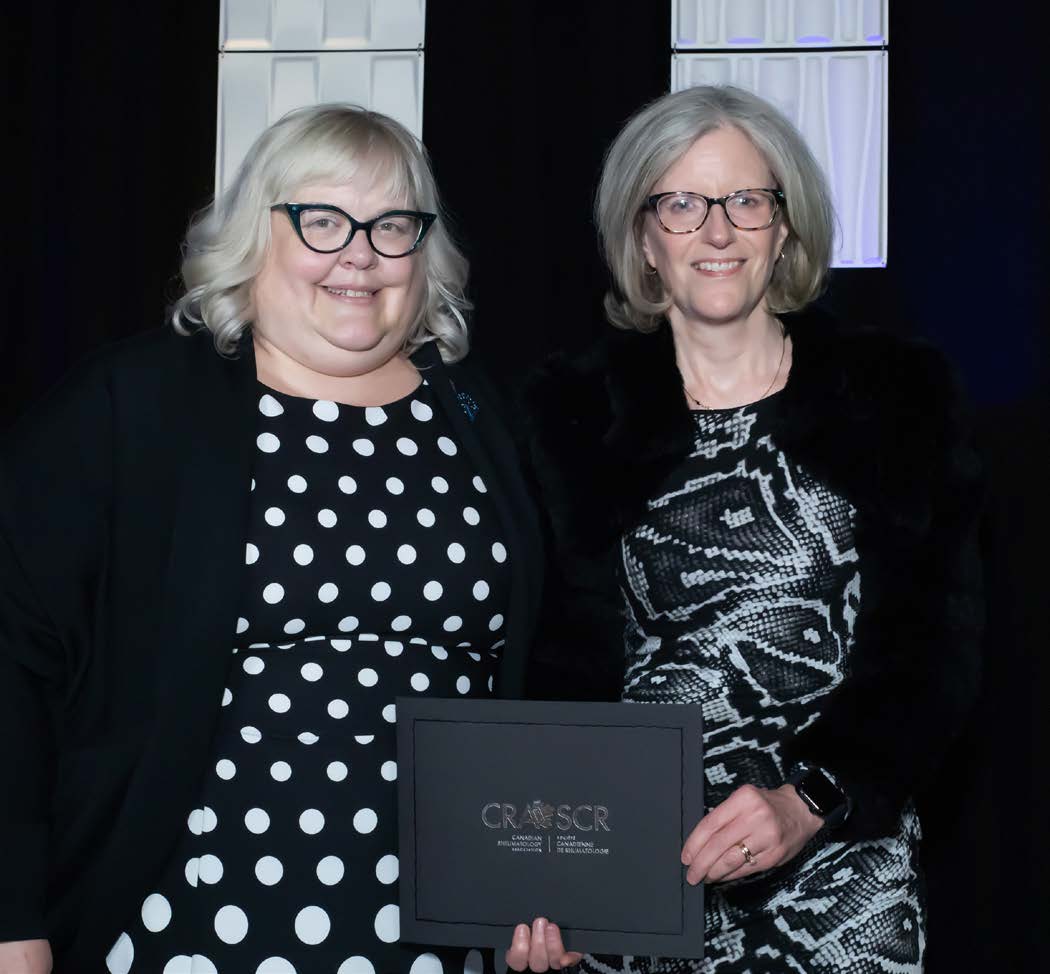
Dr. Susan Humphrey-Murto receiving her award from then-CRA President Dr. Trudy
Taylor at the CRA Annual Scientific Meeting in Halifax, which took place in April 2026.
Ironically, leadership opportunities kept finding me. The first was serving as Chief Resident in Internal Medicine, despite never putting myself forward for the role. Later, I was asked to direct the Ottawa examination centre for the national licensing OSCEs, which was an incredibly rewarding experience and introduced me to educational leadership on a much larger scale.
Since then, I have been fortunate to serve in many educational leadership roles, each one teaching me something different. What I have come to realize is that leadership isn't really about titles—it is about creating opportunities for others, bringing good people together, and helping them succeed.
That is what makes my current role as Division Head particularly meaningful. After benefiting from so many generous mentors throughout my career, I now have the opportunity to support the next generation of clinicians, educators, researchers, and leaders. That feels like a wonderful full-circle moment.
You have also made substantial local impact through the development of the Fellowship in Medical Education, the Healthcare Education Scholars Program, and the mentoring of more than forty trainees. What has mentoring meant to you?
Without question, mentoring has been one of the greatest joys of my career.
I love meeting with aspiring clinician-educators to talk about their ideas, their career aspirations, and their research questions. Early-career educators see the world differently—they ask questions I would never have thought to ask, and that curiosity is energizing. I often think I learn as much from my trainees as they do from me.
As a respected teacher-educator, what advice would you give to someone considering a career in rheumatology?
Follow your passion. Be persistent. Be honest. Be generous with your time and your knowledge.
Most importantly, surround yourself with smart, kind people you genuinely enjoy working with. Your career will be more productive and much more fun because of them.
Finally, very few careers unfold exactly as planned. Some of the best opportunities came from saying "yes" to things I had never imagined doing. Stay open to those opportunities—you never know where they might lead.
Susan Humphrey-Murto, MD, MEd, FRCPC
Professor of Medicine,
Division of Rheumatology
Department of Medicine
University of Ottawa
|