Fall 2025 (Volume 35, Number 3)
A Continental Shift: My Transition to Rheumatology in Canada
By Denis Poddubnyy, MD, PhD
Download PDF
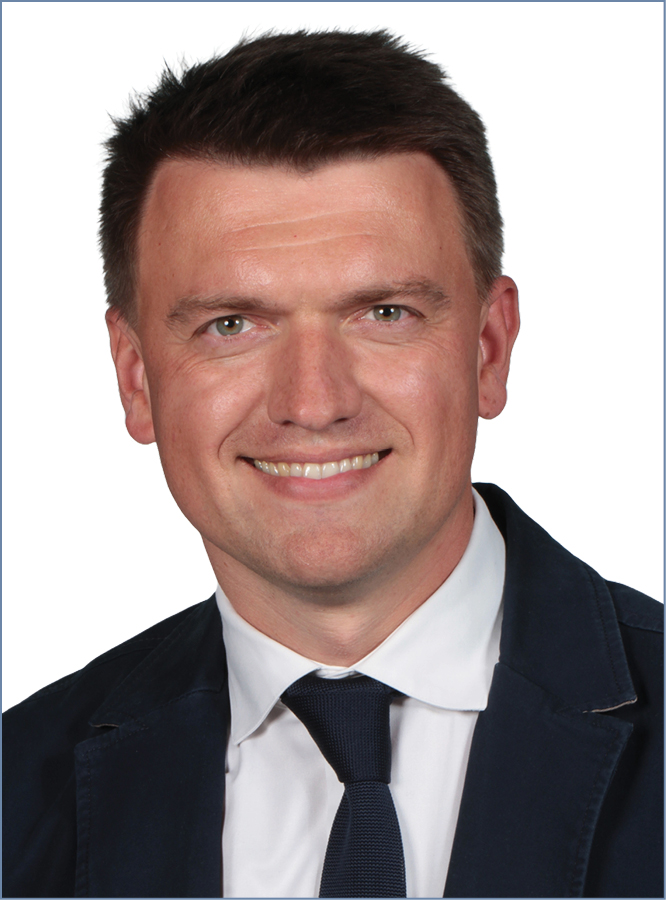
Exactly one year ago today (at the time of this writing), I landed at Toronto Pearson Airport with two suitcases and a heart full of cautious optimism. Everything I packed was—at the time—deemed essential for launching my new Canadian life, at least in summer. Warm clothes followed in a few boxes and arrived safely just in time for the first snow.
What led to that arrival was nearly a year of relentless bureaucratic procedures, enough to challenge even the most determined academic. When I finally confirmed, “Yes, I’m willing to come,” I was promptly met with a PDF full of mysterious abbreviations: CPSO, CMPA, RCPSC, OHIP… It read more like a codebook than a welcome guide. The well-meaning administrative contact seemed to assume that rheumatologists in Germany work under the same rules as those in Ontario—and that the CPSO is, perhaps, a global licensing powerhouse.
Among the many surprises was the requirement for a “Certificate of Good Standing.” At first, I had no idea what that even meant, let alone where to get one. Was this a moral evaluation? A personality test? A letter from my mother? Fortunately, after a few frantic phone calls and the usual round of confusing German bureaucracy, I learned that the local health authority in Berlin issues such certificates for people trying to leave the country (a suspiciously specific service). Thankfully, I was still in good standing—at least in the eyes of the office clerk—and got it without delay.
That was just the beginning.
You know the saying: the neighbour’s grass is always greener. Back in Germany, when I told colleagues that I was moving to Canada, many reacted with envy. Canada, in the German imagination, occupies an almost utopian place: stunning nature, a relaxed yet sophisticated culture, North American opportunity paired with European safety. To them, I was heading toward a dreamland.
Imagine my surprise when I got to Canada and encountered the exact opposite reaction: “You left Germany. . . why?” Many Canadians seemed baffled that someone would willingly trade a life in a “safe, stable European country” for. . . Toronto? To them, Germany was a land of opera houses, bike lanes, and health insurance that doesn’t require a glossary.
Still, I quickly fell in love with Toronto. One of my favourite aspects of living here is the lake—which honestly looks more like a sea. I had missed having water nearby in Berlin, and the wide, endless horizon of the lake gives the city a certain peacefulness that’s hard to describe. What impressed me even more, however, was the city’s true multicultural spirit. It genuinely doesn’t matter where you’re from, what your skin colour is, or what accent you speak with. People here care far more about what’s in your head than where your passport is from. That’s something I sadly can’t always say about rather conservative Germany.
And the kindness—wow. The level of politeness and warmth is visible everywhere: in clinics, stores, hallways, and elevators. But I must admit, it seems to end abruptly the moment someone gets behind the wheel. It’s as if entering a car triggers a transformation: the gentle, smiling pedestrian instantly becomes an impatient, honking speed machine. Perhaps this is Canada’s version of Dr. Jekyll and Mr. Hyde.
Fortunately, this kind and multicultural environment greeted me at the hospital as well. Starting work wasn’t as difficult as one might expect—medicine is still medicine. Diseases are mostly the same on both sides of the Atlantic, and 20 years of experience in internal medicine, rheumatology, and infectious diseases helped ease the transition. I found the Canadian healthcare system overall to be fair. Unlike Germany, where the two-tier system privileges the privately insured minority with shorter wait times and broader (though not always evidence-based) access to therapies, Canada’s single-payer model may involve delays, but it levels the playing field—and also protects physicians. Once a treatment is approved, no one questions the prescription. In Germany, rheumatologists often live under the shadow of insurance audits, with the ever-present risk of being asked to pay back the cost of biologics used “off-label,” regardless of outcome or patient benefit.
Another big shift: my role in inpatient care. In Germany, I was always the most responsible physician. Here, I’m a consultant. This can work well—especially when rheumatology is clearly the main issue—but in complex cases like macrophage activation syndrome or overlapping infections, the communication can be more challenging.
I now work in an academic clinical practice, trying to balance my three lives as clinician, teacher, and scientist. What I deeply appreciate here is that these roles are recognized as distinct and worthy of dedicated time. Despite being busy, I’ve found space to think conceptually, to develop ideas, and to start new projects. The university setting around me is both supportive and inspiring—something I hope continues to motivate me not only during this transition, but for many years to come.
Denis Poddubnyy, MD, FRCPC
Professor of Medicine,
Division of Rheumatology, Department of Medicine
Temerty Faculty of Medicine
University of Toronto
Senior Scientist,
Director of Advanced Imaging Studies for
Rheumatic Diseases Program
Co-director of Gladman Krembil Psoriatic Arthritis Program,
Schroeder Arthritis Institute
Krembil Research Institute
University Health Network
Toronto, Canada
|


.gif)