Fall 2025 (Volume 35, Number 3)
The CRA’s 2025 Distinguished
Teacher-Educator: Dr. Dana Jerome
Download PDF
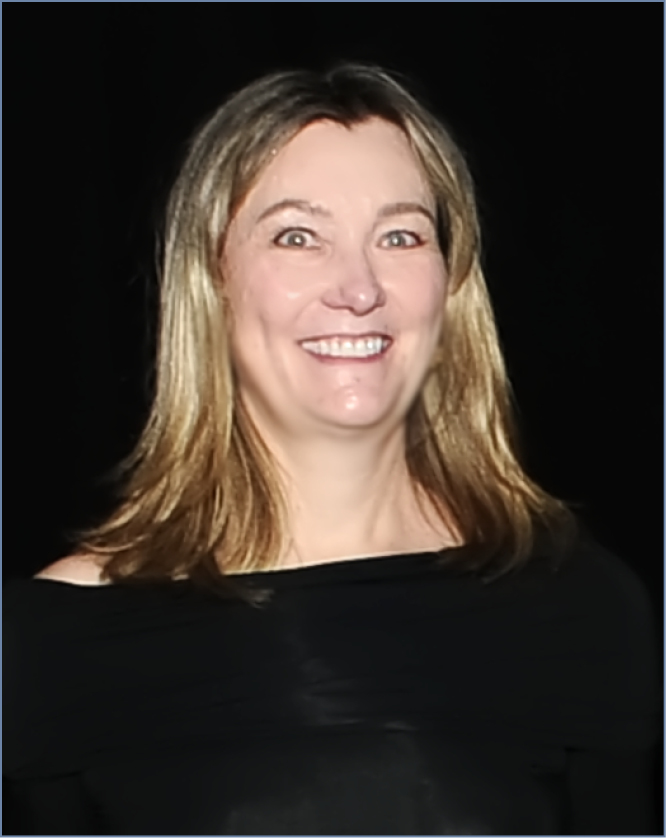
What do you believe are the qualities of a good educator? How do these apply to you?
I think a good teacher/educator is someone who takes the time to make the teaching interactions worthwhile for each student. I think that creating an environment where the trainees feel that they can ask questions, that no question is "too basic", is very important for learning. It is hard for trainees not to feel "imposter syndrome" and this can make them hesitant to ask for help or guidance. I think breaking down these barriers is vital to creating a successful learning environment.
You are a Clinician Teacher and Associate Professor of Medicine at the University of Toronto (UofT) and Division Head of Rheumatology at Women's College Hospital. You completed your medical school and Internal Medicine residency at University of Western Ontario, your rheumatology subspecialty training at the University of Ottawa and a Master of Health Professional Education at the Ontario Institute for Studies in Education, UofT. You have been a passionate contributor to rheumatology education at the University of Toronto, where you have been the Program Director of the Adult Rheumatology Training program for the last 8 years.
a) From where do you think your passion for medical education stemmed?
Wow—that is a good question. I think first and foremost I enjoy people and I enjoy rheumatology. I think that being able to share my love for rheumatology is a great joy. It is like wanting someone to share in a good meal or a piece of music you love. Sharing it is always better than enjoying it on your own. I also think that working in an environment where I am surrounded by smart, ambitious and energetic young trainees is energizing for me. Students can sometimes think of things in a different way; this can challenge the ways we have always done things and make me think harder and learn every day.
b) How has medical education changed over the course of your career?
This is also a really big question. I think medical education has changed as our world has changed and as patients and our health care system have changed. When I was a medical student, we found our information in the library, not the Internet; we didn’t have smart phones to access any bit of information at any time. How education is delivered in the current context must be different. I think we have to work harder to make sure there is a deep understanding of the material. A quick answer is available in seconds with an AI overview on a Google search. However, I think it is imperative to have a deeper understanding of why we recommend things, what the nuances are between certain choices we make in medical care and how we can apply this knowledge in patient-specific ways. Achieving these educational outcomes will be a challenge and our teaching methods will likely change over time.
There are also very concrete ways that medical education and assessments have changed. We have moved to a competency-based evaluation model where the goal is to look for mastery of a skill rather than just exposure to a skill and time-based measurement of training. I think this is still evolving and we have yet to measure the success of this initiative. Ultimately, this is likely to be tweaked and modified in order to achieve the intended purpose.
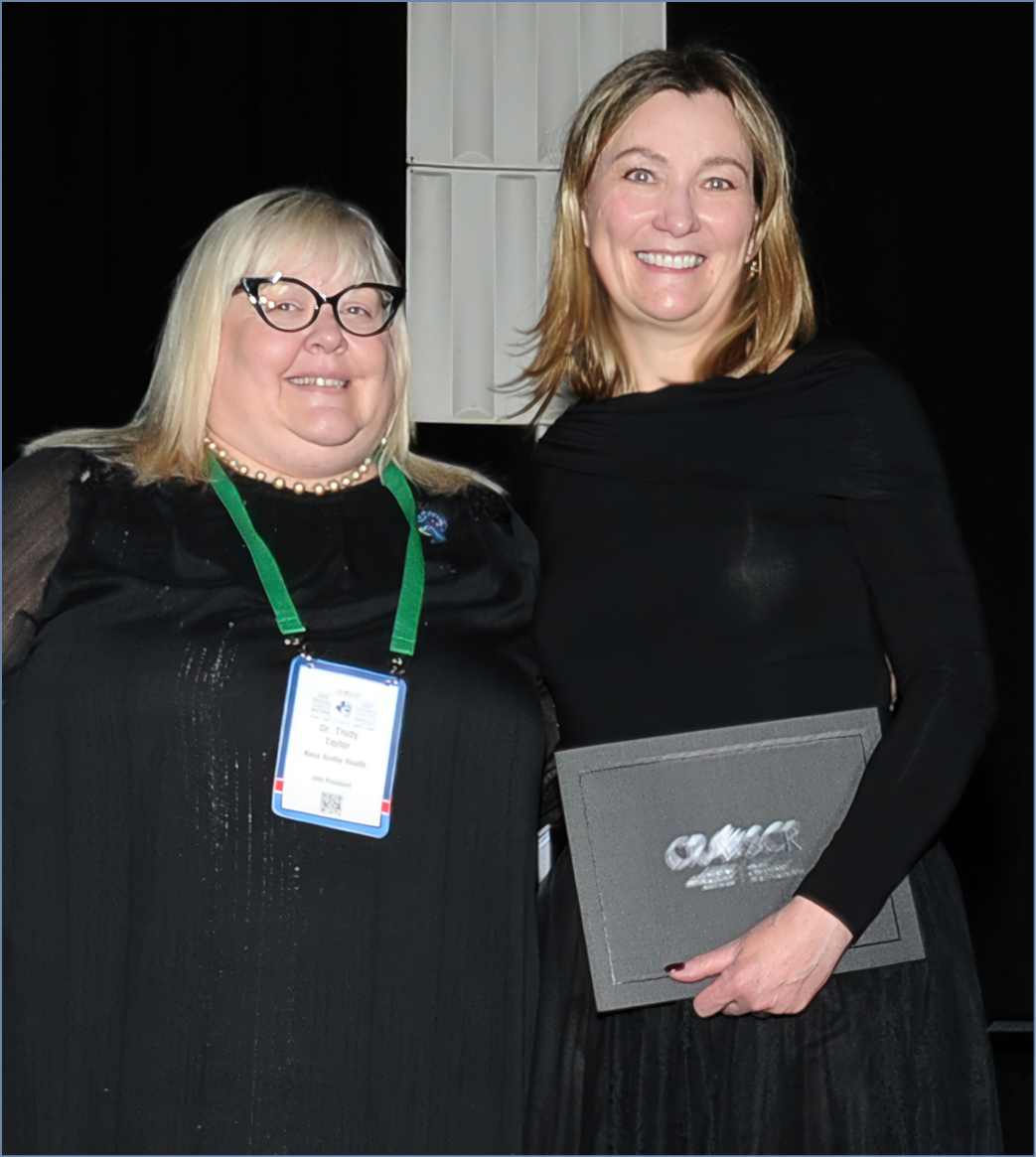
Dr. Dana Jerome receiving her award from
CRA President
Dr. Trudy Taylor at the CRA
Annual Scientific Meeting in Calgary,
which took place in February 2025.
You have also been active with leadership positions in educational initiatives provincially with the Ontario Rheumatology Association (ORA) and nationally with the CRA, including practice Objective Structured Clinical Examinations (OSCEs), resident education courses and the National Written Rheumatology In-training Exam (NWRITE). You have been a member of the Royal College Specialty Committee in Rheumatology for the past 8 years and have just taken on the role of Committee Chair.
What are some of the highlights and challenges you have experienced thus far in your career? How have you overcome these challenges?
I have been very fortunate to have had opportunities to work in so many realms of rheumatology education. Although working with students is always a highlight, I have to say that working on provincial and national projects has also been a real pleasure. It’s allowed me to get to know rheumatology colleagues from across the country. This has been a highlight because we have a country full of amazing, super-smart, inspiring rheumatologists who are some of the best people you could know. Being able to work with these colleagues has really made work better and more enjoyable. Getting to know and understand all the great work going on across the country is inspiring. I am always in awe and wish I had half as much energy as many of these amazing colleagues.
I think a challenge for so many of us is trying to feel like we have a proper balance. There are always competing demands of work and family, not to mention personal time. I don’t think I have overcome this challenge, but I have managed it as best I could over the years. What I understand now that my kids are a bit older (and I’m in the first few weeks of being an empty-nester) is that what your family needs from you changes quickly and it’s hard to keep up. My family knows that for the important things I will be there for them in an instant and that nothing is more important. However, they also know that being a doctor has its own demands, and I think that seeing me do my doctor job, having patients and other work colleagues depend on me, is also a way of “showing up” for my family in that I am demonstrating the importance of committing to something, and having an impact in my work and my community. I hope they grow up to have the good fortune of being able to have this, too.
Can you recall a teacher in your own past who inspired you and directed your own course into education?
There are so many teachers I had who inspired me over the years. Some date back to my high school teachers, like my history teacher who taught with such enthusiasm that it was easy to love the subject matter. He was a perfect example of how telling stories can help make the material relatable and memorable. I think medicine, like history, lends itself well to the power of story telling. I often think of Mr. Thomas when I am preparing a presentation and wonder what story I can tell to help emphasize my point. Within medicine/rheumatology, Dr. Janet Pope in London, Ontario, where I trained in Internal Medicine was definitely someone who made me feel that rheumatology was a fit for me. She had a unique balance of giving 100% attention to her patients, 100% to her students and 100% to her family. I know this math doesn’t add up but watching her make this work was truly inspiring. I did my rheumatology training in Ottawa and there, Dr. Doug Smith helped me decide on a career in education as I could see how fulfilling he found his academic career and as a trainee I know how much I appreciated his help and guidance.
You are a strong believer in the power of the rheumatology community. You have worked to build a culture of collegiality, mutual respect and support for all the organizations in which you have had the privilege of working. Your educational philosophy centers around the learning environment/culture, and role modelling. You firmly believe that trainees thrive and learn best when they feel safe, and when they are supported. You have worked hard to create learning environments where these goals can be achieved.
As a respected teacher-educator, what would your advice be to a prospective rheumatologist?
I think the most important thing is to do what you love. Medicine and rheumatology are special because there are so many ways to make it your own. I think the worst thing is to try to fit a mould of what you think others expect of you. Your career in medicine/education is long, and the most important thing is that you do what you love and, in doing this, you will inspire others, even without trying to do so. I recognize however that, in any career, you can’t do what you love 100% of the time and there will be hard times or hurdles you must cross, even when not “loving” the process. This is still okay if it gets you to a place that makes you happy in the long run. I think an equally important thing is to recognize that you’re a part of something bigger, and that helping others will also, in the end, help you too. So, listen, go the extra mile, offer to help, even when it isn’t the most convenient for you, and these efforts will make your career better and more fulfilling.
If you weren’t a rheumatologist/teacher-educator, what other career path might you have chosen?
It is funny that you ask this question. As Program Director, on the first day of orientation for our new trainees, I have asked each of them this question for many years. It is a way of getting to know them in a non-medicine context and I am always surprised at how interesting people are.
My answer for this question is always the same. I always tell trainees that in another life I would be an event planner where I got to organize large, elaborate and, of course, glamorous events. Alternatively, I would put my creativity to use as a floral designer and hopefully have lots of leftover flowers to take home!
You have 3 children. What lessons have you learned as a professional educator that translate well to the task of raising children, and vice versa?
Yes, I have three children, a daughter who is 19 and twin boys who are 18. I am still the same person who is a teacher/educator and a mom. One of the things I love about teaching is that I can bring home stories of things that happened or interactions that occurred with trainees and we talk about it at the dinner table. This invariably ends with a discussion about how everyone might have handled a certain situation. I hope that my kids learn from this and understand why decisions are made from a “teacher” point of view. I don’t think of myself as “mom” to my trainees but I do understand that so many things may influence how a trainee presents on a specific day or how they perform on a certain test. I think perhaps that being a mom reminds me to remember the “person” behind the student and how important it is to understand and get to know trainees and to be there for them.
What are some of your other passions outside of rheumatology?
Not surprising based on my answers to previous questions, I enjoy cooking, entertaining and flower arranging.
You are marooned on a desert island? What book would you like to have on hand with you?
Only one book is hard. An easy reading guilty pleasure is the Louise Penny Inspector Gamache series set in rural Quebec. I like stories that remind us of the goodness in people. There are so many good ones!
What is your favourite food or cuisine?
My recent obsession of the last few years has been Mediterranean food. I am a huge fan of chef Yotam Ottolenghi. I have tried most of his restaurants in London and have all of his cookbooks which are some of my favourites.
You are offered a plane ticket to anywhere in the world. Where would you like to go?
My children will tell you that the place I want to go to the most is the Galapagos Islands to see the Blue Footed Booby and other species which are unique and endangered. Machu Picchu and Buenos Aires are also high on the list.
Dana Jerome, MD, MEd, FRCPC
Chair, CRA Human Resources Committee
Program Director, Rheumatology Training Program
Assistant Professor of Medicine,
University of Toronto
Toronto, Ontario
|

.gif)